How Much Does Custom Website Development Cost in 2026?
1. The Core Variable: Who is Building Your Website?
Before we even discuss the technology stack, the number of pages, or the complexity of the animations, we have to talk about the human element. Who builds your site dictates your budget more than any other single factor. There are generally three paths you can take, and each comes with its own financial ecosystem.
The Freelance Developer
Freelancers operate with low overhead. They don’t have to pay for a swanky downtown office, a dedicated HR department, or a bloated management structure. When you hire a freelancer, you are paying strictly for their time and their expertise.
However, freelancers are single points of failure. A great freelancer can build you a stunning website for a fraction of an agency's cost, but if they get sick, take another job, or simply disappear, your project stalls. Furthermore, one person is rarely an expert in everything. The person who writes brilliant backend server logic might be terrible at designing user interfaces (UI), and vice versa.
The Boutique Development Agency
This is the middle ground. Boutique agencies usually consist of a small, specialized team: a project manager, a UI/UX designer, a couple of front-end developers, and a back-end engineer. You pay a premium over a freelancer, but you get a team of specialists rather than a jack-of-all-trades.
You also get accountability. If one developer goes on vacation, the agency assigns another to your project. For most small to mid-sized businesses, this is the sweet spot. You get enterprise-grade quality without the massive corporate markup.
The Enterprise Web Development Firm
These are the heavyweights. They handle massive, high-stakes projects for Fortune 500 companies, large e-commerce brands, and government institutions. When you hire an enterprise firm, you are paying for rigorous quality assurance (QA), extensive user testing, ironclad security audits, and dedicated account management.
Their hourly rates reflect this massive infrastructure. While a freelancer might charge $50 an hour, an enterprise firm will easily bill $200 to $350 an hour for their team's time.
2. Platform vs. Fully Custom: Understanding the Difference
The word "custom" is thrown around loosely in web development. You need to understand the difference between customizing an existing platform and custom-coding a solution from scratch.
Content Management Systems (CMS):
Platforms like WordPress or Shopify power a massive portion of the internet. A "custom WordPress site" usually means the developer is taking the core WordPress software and building a bespoke theme (the design) and integrating specific plugins (the features) tailored to your business. You aren't reinventing the wheel; you are just customizing the car. This dramatically lowers development time and, consequently, the cost.
Fully Custom Frameworks:
If your business logic doesn't fit into a standard box—for example, if you are building a new Software as a Service (SaaS) product, a custom real estate portal with complex mapping integrations, or a bespoke booking engine—you need fully custom development. In these cases, developers use frameworks like React, Vue.js, Node.js, Django, or Laravel. They write the underlying logic from scratch. Because every database query and user interaction must be programmed, tested, and secured manually, the cost is significantly higher.
3. Cost by Website Type: Global Benchmarks
Let’s look at hard numbers. If you are hiring developers based in North America or Western Europe, here is what you can generally expect to pay in 2026 based on the complexity of your project.
The Brochure Website ($2,500 – $10,000)
What it is: A 5 to 10-page website that acts as a digital storefront. It includes a Home page, About Us, Services, Testimonials, and a Contact form.
The Engine: Usually built on a CMS like WordPress or Webflow.
Who it's for: Local service providers, consultants, law firms, and small businesses that need to establish trust and capture leads, but don't need complex online functionality.
Cost Drivers: The bulk of this budget goes toward visual design, copywriting, and ensuring the site looks flawless on mobile devices.
The Advanced Corporate Website ($15,000 – $40,000)
What it is: A larger site (20+ pages) with advanced CMS capabilities, robust SEO structures, fast load times, and custom integrations (like connecting lead forms directly to a CRM such as Salesforce or HubSpot).
The Engine: Custom WordPress, Drupal, or headless CMS architectures.
Who it's for: Mid-sized companies, B2B enterprises, and organizations looking to rank highly on search engines and handle significant daily traffic.
Cost Drivers: Custom content types, advanced animations, third-party API integrations, and strict performance optimization.
The Custom eCommerce Store ($25,000 – $100,000+)
What it is: A platform designed specifically to sell physical or digital goods, manage inventory, handle complex shipping rules, and process payments securely.
The Engine: Shopify Plus, Magento (Adobe Commerce), or custom WooCommerce builds.
Who it's for: Retailers, Direct-to-Consumer (D2C) brands, and wholesalers.
Cost Drivers: The size of the product catalog is a huge factor. Building a store with 50 products is radically different from migrating a database of 5,000 SKUs. Other cost drivers include multi-currency support, custom checkout flows, ERP integrations, and personalized product recommendation engines.
The Custom Web Application / SaaS ($75,000 – $300,000+)
What it is: This isn't just a website; it is software that lives in the browser. It features robust user authentication, complex databases, personalized dashboards, and unique business logic.
The Engine: React, Angular, Node.js, Python, Ruby on Rails.
Who it's for: Tech startups, internal corporate tools, healthcare portals, and anything that requires users to log in and manipulate data.
Cost Drivers: Security compliance (like HIPAA for healthcare), real-time data processing, massive server architecture planning, and rigorous bug testing.
4. The Geography Factor: Onshore vs. Offshore Pricing (2026 Data)
Because software development is an entirely digital process, you are not restricted to hiring locally. The geography of your development team is one of the most powerful levers you can pull to adjust your budget.
If you are a startup in New York, London, or Sydney, hiring a local agency will subject you to local living costs. However, outsourcing to massive tech hubs in India or Eastern Europe can yield identical technical results at a fraction of the price.
Looking at the 2026 data for the Indian market, the price differences are stark:
Hourly Rates: In India, a junior developer might bill ₹500–₹1,500 ($6 – $18) per hour, while a senior developer or tech lead bills ₹4,000–₹10,000 ($48 – $120) per hour.
Basic Business Websites: A standard foundational presence costs roughly ₹15,000 to ₹50,000 ($180 – $600).
WordPress Development: A professional WordPress site built for flexibility and SEO can range from ₹25,000 up to ₹1,50,000 ($300 – $1,800) depending on the level of customization.
eCommerce (Shopify/WooCommerce): Mid-tier online stores typically land between ₹30,000 and ₹2,00,000 ($360 – $2,400). Larger catalogs with multi-vendor capabilities can push past ₹5,00,000 ($6,000+).
Custom Web Applications: For highly specific SaaS platforms, booking systems, or enterprise portals built from scratch, Indian agencies generally charge between ₹1,50,000 to ₹10,00,000+ ($1,800 to $12,000+), with massive enterprise systems scaling upwards of ₹20,00,000.
Key insight: While the cost savings of offshore development are immense, you must factor in potential timezone friction and cultural nuances in design preferences. The most successful offshore projects require incredibly clear documentation and communication from the client side.
5. The Phase-by-Phase Breakdown of Development Costs
To understand why a custom website costs what it does, you have to look at how the sausage is made. Professional development is divided into strict phases. When an agency quotes you $50,000, here is where those hours are actually being spent.
Phase 1: Strategy and Architecture (10% - 15% of budget)
Before a single line of code is written or a single color is chosen, the agency must map the terrain. This involves creating user personas, defining the site map (the hierarchy of pages), and planning the database architecture. Skipping this phase is like building a house without a blueprint; it guarantees structural failure down the line.
Phase 2: UI/UX Design (20% - 30% of budget)
User Experience (UX) design focuses on how the site works logically—where buttons go, how navigation flows, and how users find information. User Interface (UI) design focuses on how the site looks—colors, typography, and brand identity. Custom design means starting with blank canvases (wireframes) and designing every single screen from scratch, ensuring it aligns perfectly with your brand.
Phase 3: Front-End Development (20% - 30% of budget)
The front-end is everything the user sees and interacts with. Front-end developers take the static designs created in Phase 2 and bring them to life using HTML, CSS, and JavaScript. They build the animations, ensure the site reshapes itself perfectly for mobile phones and tablets (responsive design), and optimize images so the site loads in milliseconds.
Phase 4: Back-End Development (20% - 40% of budget)
The back-end is the brain of the website. It is the server, the database, and the application logic that powers the site behind the scenes. If a user submits a contact form, the back-end routes that data to your email. If a user buys a product, the back-end updates the inventory database, processes the credit card, and triggers a shipping email. Complex back-ends require serious engineering talent, which is why highly functional sites cost exponentially more than static brochure sites.
Phase 5: QA Testing and Launch (10% - 15% of budget)
Quality Assurance (QA) is the process of trying to break the website before the public gets to see it. Testers will view the site on dozens of different devices (iPhones, Androids, MacBooks, Windows PCs) and browsers (Chrome, Safari, Firefox, Edge) to ensure uniform performance. They test forms, validate payment gateways, and check for security vulnerabilities.
6. The "Invisible" Ongoing Costs
A custom website is not a product you buy once and put on a shelf; it is a living digital asset. Just as a physical store requires rent, electricity, and maintenance, a website has ongoing operating costs. Many first-time buyers deplete their entire budget on the initial build and have nothing left for maintenance.
Here are the recurring costs you must budget for in 2026:
Component | Estimated Annual Cost | What It Covers |
Domain Name | $10 – $20 | Your web address (e.g., yourcompany.com). |
Web Hosting | $150 – $5,000+ | Server space. Shared hosting is cheap; Cloud (AWS, GCP) is costly. |
SSL Certificates | Free – $200+ | Data encryption (the padlock in the URL bar). |
Premium Licenses | $100 – $1,000+ | Third-party plugins, themes, and API services. |
Maintenance (AMC) | $1,200 – $12,000+ | Security patching, backups, and software updates. |
7. How to Avoid Overpaying (And Underpaying)
Navigating web development quotes can feel like walking through a minefield. Here is how to protect your investment:
Beware the "Too Good to Be True" Quote:
If Agency A quotes you $25,000 and Agency B quotes you $3,000 for the exact same list of requirements, Agency B is hiding something. They are likely using a pirated theme, skipping mobile optimization, ignoring QA testing entirely, or planning to hold your code hostage once the project is finished. Cheap development usually results in a site that has to be entirely rebuilt a year later.
Demand Itemized Proposals:
Never accept a flat "Website Build: $40,000" quote. A professional agency will break down exactly where those hours are going. How much is allocated to design? How much to backend integration? How much to QA? This transparency prevents scope creep and ensures you know exactly what you are buying.
Define the Scope Clearly:
The biggest reason projects go over budget is "scope creep"—when you keep adding "just one more little feature" during the build. Every new feature requires design, front-end code, back-end code, and testing. To keep costs down, write a massive, highly detailed specification document before you ask for quotes. The clearer your vision, the tighter and more accurate the estimates will be.
The Bottom Line
Building a custom website is an investment in your business infrastructure. If you are a local service provider who just needs people to find your phone number and verify you exist, a $2,000 build will serve you perfectly well. But if your website is your business—if it processes thousands of dollars in transactions, generates your primary leads, or manages your customer data—investing $30,000 to $100,000+ with a reputable agency is not an expense; it is the cost of building a high-performance digital storefront.
Take the time to evaluate your exact needs, understand the ongoing costs, and choose a development partner whose expertise aligns with your scale. When done correctly, a custom website doesn't cost you money—it makes you money.
Written By

Rahul Dev
Seo Expert
Keep Reading
More insights from the WebMixStudio team.

How to Choose the Right Web Development Agency for Your Project.
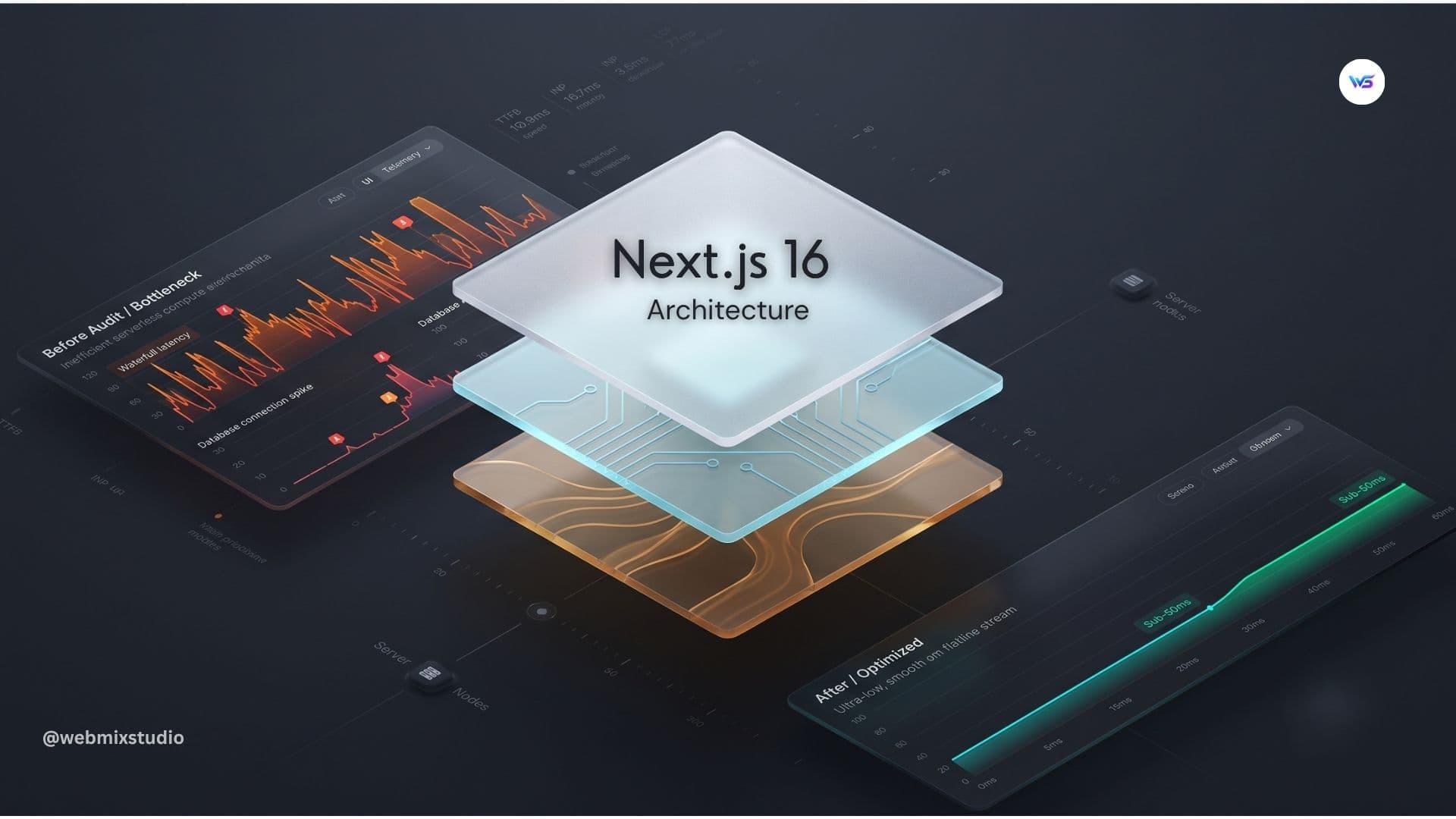
Next.js App Router in Production: 5 Architectural Mistakes Crashing Your Core Web Vitals & Server Costs